MCX Margin Calculator
Calculate SPAN & exposure margin for Gold, Silver, Crude Oil & Natural Gas commodity futures on MCX India.
👑 Unlock Pro Commodity Analytics
Upgrade to unlock multi-commodity margin calculator, overnight vs intraday margin comparison, and margin shortfall stress testing.
🚀 Unlock Pro Access — Add to Cart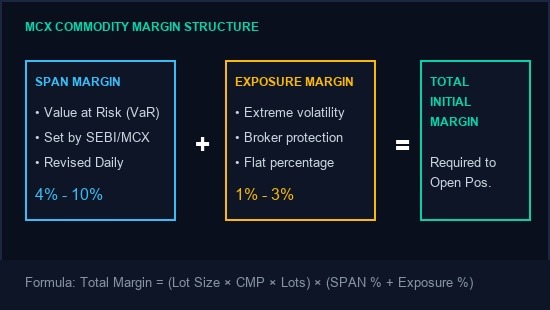
What Is MCX Margin and How Is It Calculated?
Trading commodity futures on the Multi Commodity Exchange (MCX) requires placing an initial margin before opening any position. So every trade has two main components: SPAN margin and exposure margin.
SPAN (Standard Portfolio Analysis of Risk) margin covers the maximum portfolio loss calculated by SEBI risk algorithms. Meanwhile, exposure margin acts as an extra buffer against extreme market swings. Together, these form your total initial margin.
For example, trading 1 lot of Gold (1 kg) at ₹62,000 per 10 grams creates a contract value of ₹62 Lakhs. With a 4% SPAN margin (₹2,48,000) and 1% exposure margin (₹62,000), your total required margin is ₹3,10,000. So our mcx margin calculator helps you plan exact capital needs for every commodity.
MCX Margin vs NSE F&O Margin — Key Differences
Commodity margin rules differ from equity futures margin in leverage ratios, trading hours, and delivery terms. Here is how MCX trading compares directly with NSE equity derivatives.
| Feature | MCX Commodity F&O | NSE Equity F&O |
|---|---|---|
| Underlying Assets | Gold, Silver, Crude Oil, Natural Gas, Metals | Nifty 50, Bank Nifty, Stock Futures |
| Typical Margin Range | 5% to 12% of contract value | 12% to 25% of contract value |
| Trading Hours | 9:00 AM to 11:30 PM (11:55 PM in US DST) | 9:15 AM to 3:30 PM |
| Settlement Type | Physical delivery (Gold/Silver) & Cash settled | Physical delivery for stock F&O, Cash for indices |
| Taxation | Commodity Transaction Tax (CTT 0.01%) | Securities Transaction Tax (STT 0.125%) |
How to Use This Calculator for Position Sizing
Successful trading depends on strict position sizing. Never deploy your entire account balance into a single commodity lot, because market spikes can trigger margin calls.
We recommend keeping a buffer of at least 30% above the required initial margin. Check your overall risk using our Position Size Calculator before entering any trade. You can also estimate total trading costs with our Indian Stock Brokerage Calculator.
How It Works in 4 Steps
Select Commodity
Choose Gold, Silver, Crude Oil, Natural Gas, or Metals from the dropdown menu.
Set Contract Price
Accept the pre-filled CMP or enter your broker’s current live market price.
Adjust Lot Count
Slide or enter the number of lots you plan to trade on MCX.
Review Breakdown
View total margin required, SPAN vs exposure split, and max lots for your capital.
Master Indian Stock & Commodity Trading
Learn risk management, technical analysis, and futures position sizing from Ashok Kumar N Rao. Over 3,500 students trained.
Frequently Asked Questions
Regulatory Reference: Multi Commodity Exchange of India (MCX) is regulated by the Securities and Exchange Board of India (SEBI). Commodity margins are determined according to SEBI circulars on risk management framework for commodity derivatives (SEBI/HO/CDMRD/DRMP/CIR/P/2019/149). CTT rates apply under Chapter VII of the Finance Act 2013. SPAN® is a registered trademark of Chicago Mercantile Exchange used under license.