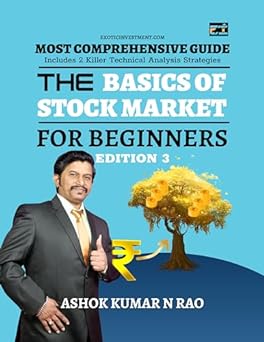
What is best stock market books for beginners?
Listen, boss, if you are just starting out in the Indian stock market, you need the right reading material. Period. There are so many books out there that it can overwhelm anyone. That is why I have shortlisted the best ones specifically for Indian investors like us.
The best book to learn stock market trading depends on what you want to achieve. Are you looking for value investing? Technical analysis? Or just plain basics?
Here are my top picks from the top 5 stock market books for beginners that every Indian trader should read:
1. The Intelligent Investor by Benjamin Graham — This is the bible of value investing. Warren Buffett calls it the best book on investing ever written. It teaches you how to think like an investor, not a gambler.
2. One Up On Wall Street by Peter Lynch — Lynch shows how ordinary people can beat professionals. He buys stocks he understands in his daily life. Simple, practical, and super effective for Indian markets too.
3. Let’s Talk Money by Monika Halan — This is a must-read for every Indian. She explains mutual funds, SIPs, and portfolio building in pure desi language. No confusion at all.
4. Stock Market Genius by Parag Bhansali — Written by an Indian author who actually trades in NSE and BSE. It covers technical analysis and option buying with real Indian examples.
5. Rich Dad Poor Dad by Robert Kiyosaki — Not strictly a stock market book, but it changes your money mindset completely. If you do not read this, at least skim through it.
These are genuinely the best books to learn Indian stock market investing. They cover everything from basic concepts to advanced strategies. Each book fills a different gap in your knowledge.
Why best stock market books for beginners Matters for Indian Stock Traders
Here is the thing — most new traders jump into Zerodha or Groww and start pressing buy and sell buttons blindly. Sound familiar? That is exactly how people lose money fast.
Reading good books builds a strong foundation. Without it, you are just gambling disguised as trading. SEBI has strict rules, and they keep changing them. A proper book teaches you the framework before you put a single rupee at risk.
Also, books don’t charge you brokerage. Think about it — every wrong trade costs you money. Open a Zerodha brokerage calculator or check the Upstox brokerage calculator. You will see how quickly small losses add up. Books prevent those losses.
Indian markets are different from US markets. The volatility, the sector rotation, the F&O ban list — these are all unique to NSE and BSE. Western books give you principles, but Indian authors explain how those principles work in our context.
That means less trial and error for you. Less burning of hard-earned capital. And more confidence when you place your first real trade.
Key Concepts Related to best stock market books for beginners

Illustration: Top 5 Stock Market Books For Beginners
Now let us break down the key ideas you will find across these stock market books for beginners.
Compound Interest and SIP: Almost every good book stresses the power of compounding. If you invest ₹5,000 monthly through a SIP calculator, you can grow significantly over 10–15 years. Books explain the math behind it so you trust the process.
Margin of Safety: This is Graham’s big idea. Always buy at a price lower than the true value. Never pay full price for a stock. This protects you when the market turns down.
Technical Analysis Basics: Candlestick patterns, support and resistance, moving averages — these appear in almost every trading book. Learn them properly before you touch the charts on your trading app.
Risk Management: The biggest concept. Never risk more than 1–2% of your capital on a single trade. Use stop loss tools religiously. Set your stop loss and never move it further away.
Pivot Points: Many books introduce pivot points for intraday trading. Calculate them using a pivot point calculator and trade around those levels.
Portfolio Diversification: Don’t put all eggs in one basket. Spread across sectors — banking, IT, FMCG, pharma. This reduces risk when one sector goes through a tough phase.
Power of Position Sizing: Books teach you how much quantity to buy based on your capital and stop loss distance. This is what separates professional traders from gamblers.
How to Apply This Knowledge Step by Step

Illustration: Best Book To Learn Stock Market
Alright, you have the books. Now how do you actually use them?
Step 1: Start with Let’s Talk Money or any best books on stock market investing that covers basics. Read it cover to cover. Take notes. Highlight important lines.
Step 2: Open a demat account with Zerodha, Groww, or Upstox. Keep it simple. Do not overthink which broker to pick. Any SEBI-registered broker works fine for learning.
Step 3: Start with paper trading or very small amounts. Track every trade in a journal. Note your entry, exit, reason, and emotion.
Step 4: Learn to calculate your profits. Use a stock profit calculator to understand exactly how much you earn or lose on each trade. No guessing.
Step 5: Move to The Intelligent Investor for long-term investing wisdom. Then read One Up On Wall Street to learn stock selection.
Step 6: Practice technical analysis on historical charts. Use free tools on TradingView or your broker’s platform. Study Nifty 50 stocks first before jumping to smallcaps.
Step 7: Finally, build your own trading plan. Write it down. Include your risk per trade, maximum positions, sector allocation, and exit rules. Follow it like a machine.
Recommended Trading Courses & Premium Subscriptions:
- Options Buying Course in Kannada: Options Buying Course in Kannada.
- Technical Analysis in Kannada Course: Technical Analysis in Kannada Course.
- Kaliyiri Share Market Book: Kaliyiri Share Market Book.
- Basics of Stock Market Course: Basics of Stock Market Course.
- Multibagger Stocks Pro Subscription: MultiBagger Plus Courses & Pro Tools Annual Subscription (Checkout link: Buy Pro Subscription).
Common Mistakes and How to Avoid Them

Illustration: Best Books To Learn Indian Stock Market
Let me tell you what I see every day on the ground. New traders make the same mistakes again and again. Here is the real deal — avoid these and you will already be ahead of 80% of players.
Mistake 1: Trading without a stop loss. This is the number one killer of trading accounts. Every trade must have a predefined exit point. Use the stop loss calculator to figure out the right level. No excuses.
Mistake 2: Chasing tips and Telegram signals. Listening to random tips will wipe your account. Read books instead. Build your own conviction. Your own analysis beats someone else’s guess every time.
Mistake 3: Overtrading in F&O. SEBI data shows that 9 out of 10 individual traders in futures and options lose money. That means 90%. Do not join that statistics unless you are well prepared.
Mistake 4: Ignoring fundamentals completely. Even if you are a technical trader, knowing the company’s basics matters. Check P/E ratio, debt levels, and promoter holding before entering any position.
Mistake 5: Moving stop losses. Some traders keep widening their stop loss hoping the price will come back. It usually doesn’t. Accept the small loss and move on. That is how professionals survive.
Mistake 6: Not keeping a trade journal. If you do not record your trades, you cannot learn from them. This is non-negotiable. Review your journal weekly and improve.
Advanced Trading Tips to Master This Topic
Once you have read the foundational books and practiced enough, here are advanced tips to take your game to the next level.
Master one strategy: Do not try to learn everything at once. Pick either swing trading or positional trading. Master it completely. Then explore other styles.
Use a profit calculator: Always check potential returns before entering. A profit calculator helps you size your position correctly. It also keeps your emotions in check.
Follow market structure: Watch Nifty 50, Bank Nifty, and sector indices. Understand which sector is leading and which is lagging. Rotate your focus accordingly.
Learn from failures: Every losing trade is a lesson. Analyze it calmly. Was it a bad setup? Poor execution? Or just normal market noise? Be honest with yourself.
Stay updated on SEBI regulations: SEBI frequently updates rules around margin, F&O bans, and disclosure norms. Read their circulars. Stay compliant. It protects you legally and financially.
Keep emotions out of trading: Greed and fear are your worst enemies. Books teach you discipline. Practice it daily. Trade small until your consistency proves otherwise.
Also, consider reading Market Wizards by Jack Schwager for insights from top traders worldwide. It will blow your mind with real stories of success and failure.
Final Summary
So here is the bottom line, friend. The best stock market books for beginners are not about getting rich quick. They are about building real knowledge, proper mindset, and sustainable habits.
Start with Let’s Talk Money for basics. Then move to The Intelligent Investor for investing wisdom. Add One Up On Wall Street for stock picking. And pick up Stock Market Genius for technical skills.
Read them. Apply them. Track your progress. Use free calculators for stop loss, SIP, and profit calculations. Keep your risk management tight and your emotions under control.
The Indian stock market rewards the disciplined. It punishes the impulsive. Choose to be disciplined. Start reading today. Your future self will thank you for it.
No shortcuts exist. But the right books make the journey smoother and faster. Pick yours, open a demat account, and begin your journey as a serious investor — not a gambler. That is the path to long-term success in the Indian stock market.