
If you want to master Indian stock trading, knowing what is fii and dii in stock market is essential. Let’s keep things completely straightforward today. No confusing jargon, no complicated formulas. In this guide, we will break down everything in clear steps so you can trade with total confidence.
What is FII and DII in Stock Market? The Institutional Powerhouses
Listen, boss, here is the deal. Every single trade executed on NSE or BSE follows strict rules laid down by SEBI. When you understand how these market mechanics work, you protect your hard-earned capital from unnecessary mistakes.
Truth is, many new traders jump in without checking basic concepts. As a result, they get trapped when prices move fast. So, learning the exact framework behind daily stock price movements gives you an immediate edge.
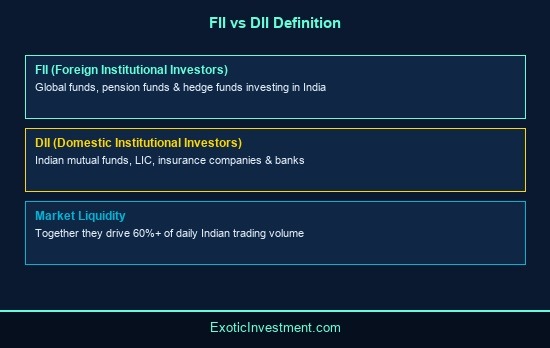
Illustration: FII vs DII Definition
FII vs DII: Key Differences & Investment Mandates
Now, let us look at the practical step-by-step process. First, analyze how stock valuations behave during live market hours. Second, check trading volumes and liquidity before placing your order.
Third, keep track of daily market volatility. That means using proper order types and strict risk controls so your trades stay disciplined regardless of sudden market swings.
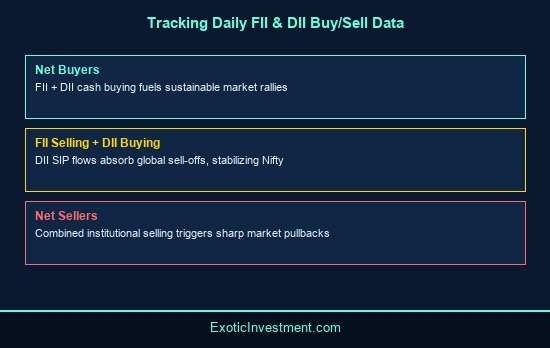
Illustration: Tracking Daily FII & DII Buy/Sell Data
How to Track Daily FII & DII Data on NSE & BSE
Here is another important factor — costs and regulations. Brokerage charges, STT, transaction fees, and GST apply to every order on Indian stock exchanges. Therefore, knowing your net break-even point is critical.
Also, keeping clear records of your trades makes annual tax filing smooth. Make sure you check calculation tools or talk to a trusted advisor to manage your portfolio correctly.
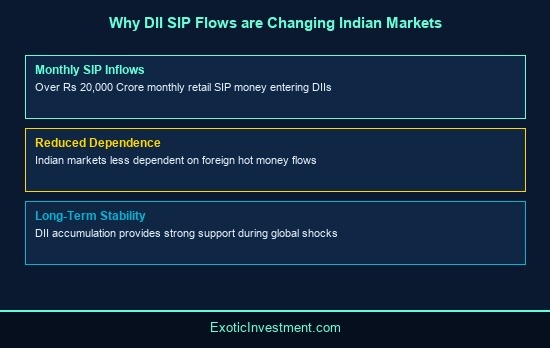
Illustration: Why DII SIP Flows are Changing Indian Markets
The Rise of DII Mutual Fund SIP Money in India
Finally, building a successful trading career requires discipline. Avoid taking impulsive trades based on unverified tips or social media hype. Instead, focus on position sizing and long-term compounding.
To put it simply, consistency and continuous learning are what turn beginner traders into successful long-term investors in the share market.
Recommended Trading Courses & Premium Subscriptions:
- Options Buying Course in Kannada: Options Buying Course in Kannada.
- Technical Analysis in Kannada Course: Technical Analysis in Kannada Course.
- Kaliyiri Share Market Book: Kaliyiri Share Market Book.
- Basics of Stock Market Course: Basics of Stock Market Course.
- Multibagger Stocks Annual Subscription: MultiBagger Plus Courses & Pro Tools Annual Subscription (Checkout link: Buy Pro Subscription).
Frequently Asked Questions
What is FII and DII in stock market in simple terms?
FIIs are foreign institutional investors from overseas, while DIIs are domestic Indian financial institutions like mutual funds and LIC.
Where can I check daily FII DII activity?
You can check daily FII and DII net buying or selling numbers on the official NSE India website or financial news portals. Explore our Exotic Investment Tool Guide to plan your trading system efficiently.