
Understanding SME IPO Shares & Listing Mechanics
👨🏫 Real Market Experience & SEBI Disclosure: Written by Dr.Ashok Kumar N Rao and the Exotic Investment research desk based on 12+ years of active market trading. All insights follow SEBI investor education guidelines. Exotic Investment does not provide unsolicited tips or PMS services. Always test trading setups with disciplined position sizing before risking live capital.
Let’s keep it simple, boss.
SME IPO stands for Small and Medium Enterprises Initial Public Offering. These are tiny companies that go public on the BSE SME or NSE Emerge platforms. They are completely different from mainboard IPOs you see every day.
When a company launches an SME IPO, retail investors can apply and get allocated shares. The story doesn’t end there though. You can sell those shares once they list on the exchange.
Here’s the thing. Selling SME IPO shares in India follows specific rules set by SEBI. The listing process, the trading hours, and even the circuit limits work differently than regular stocks. Many new investors miss these details and end up stuck or making bad decisions.
So what exactly does “sell SME IPO shares” mean? It means once your allotted shares get credited to your demat account after listing, you place a sell order through your broker app just like you would for any other stock. But the dynamics are totally different. SME stocks hit circuit limits very fast. Liquidity is thin. And prices can swing 5% to 40% in a single day.
I have seen traders make life-changing money from SME IPO listings. I have also seen them wipe out gains in minutes because they didn’t understand the mechanics. That means you need to know the full picture before you even apply for one.
Why SME IPO Liquidity Rules Matter for Traders
Listen, selling SME IPO shares at the right time can literally change your financial life. Let me tell you why this matters so much for every Indian trader.
First, SME IPO listings often give massive first-day returns. I have watched stocks jump 100%, 200%, even 500% on their listing day. That kind of return from a small investment of just a few thousand rupees is rare in regular trading. No confusion here, it is one of the fastest wealth-building tools in the Indian market.
But here is the real deal. If you do not know how and when to sell, you will lose it all. SME stocks are famous for hitting upper circuits repeatedly after listing. That means you cannot sell when you want to. Your shares get locked in buy-side circuits for days or even weeks. Many investors applied with excitement and then realized their money was trapped with no way out.
Second, SME IPOs provide incredible learning ground for beginners. The volatility teaches you risk management faster than any textbook. You learn about stop losses, position sizing, and emotional control the hard way. That knowledge stays with you forever in your trading career.
Third, the liquidity situation is unique. SME stocks trade on dedicated segments with different investor categories. Foreign portfolio investors cannot touch them directly. That restricts demand but also keeps institutional manipulation low. You are mostly competing with other retail traders and HNI investors. Which means technical analysis actually works quite well here.
Also, consider this. A single smart SME IPO trade can fund your SIP contributions for an entire year. That is powerful when you think about it.
Key Demat & Lot Size Rules for Selling SME Shares

Before you press that sell button, let me break down the key concepts you absolutely must understand.
Circuit Filters: Every SME stock has preset daily price bands. Initially, these can be as high as 40% upper circuit and 40% lower circuit on the first few days. After that, it settles to a standard 20% band. This is set by NSE Emerge and BSE SME platforms. It means prices can only move within these limits each trading session. If a stock hits the upper circuit, nobody can sell. That is why stop loss strategies work differently for SME stocks compared to regular equities.
Listing Process: After your IPO subscription closes, the company fixes the listing date. Shares get credited to your demat account on or before that date. You can check your holding in your broker dashboard. Most popular brokers like Zerodha, Upstox, and Groww show these shares automatically. Once listed, they appear in your portfolio and you can sell them anytime during market hours.
Investor Categories: SEBI has divided investors into three categories for SME IPOs. QIB (Qualified Institutional Buyers), NII (Non-Institutional Investors), and RPI (Retail Individual Investors). Each category gets a different reservation of shares. Retail gets 50% of the issue. This matters because when you sell, your order goes into a pool where all three categories compete. Understanding this helps you manage expectations around execution speed.
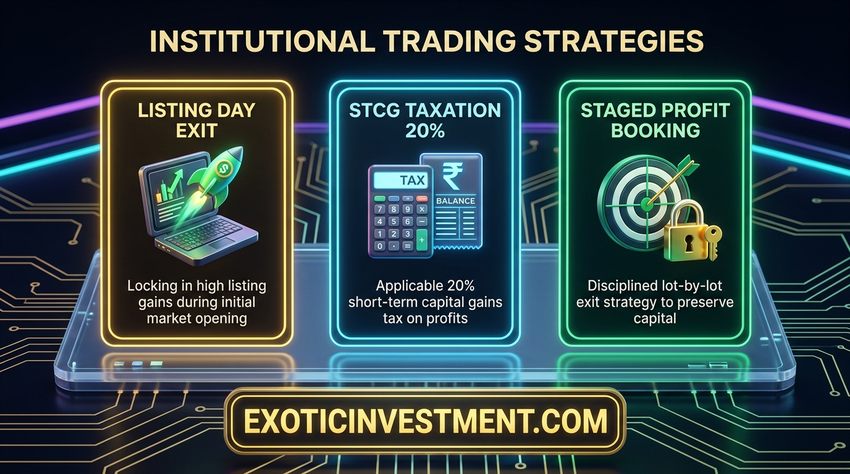
Tax Implications: Short-term capital gains tax applies if you sell within one year of purchase. For SME IPOs, most people sell on or shortly after listing. So your gain falls under short-term slab rates which is your income tax bracket. Long-term gains above Rs 1.25 lakh attract 12.5% tax under new rules. Always calculate your actual profit using a proper profit calculator before deciding your exit. Do not guess with tax numbers.
Minimum Trading Units: SME stocks trade in lots. The lot size varies from company to company. It could be 100 shares, 500 shares, or even 1000 shares per lot. Check the lot size before you apply. Selling partial quantities is not allowed in most cases. This is different from regular stock trading where you can sell any number of shares.
sme ipo liquidity is probably the single most important concept here. SME stocks typically have very low trading volumes compared to mainboard stocks. A stock might show only a few hundred thousand rupees in daily turnover. That means big sell orders can crash the price instantly. Always use limit orders instead of market orders when you decide to sell.
How to Apply This Knowledge Step by Step
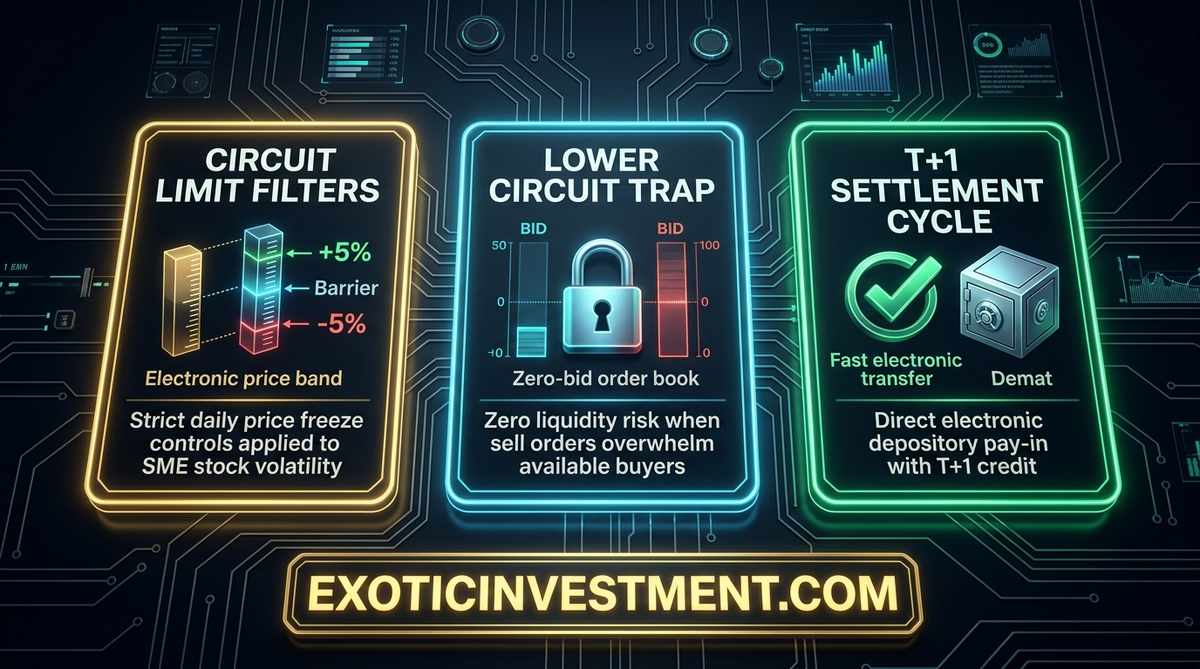
Now let us walk through the exact process step by step. Follow this sequence and you will be golden.
Step 1: Apply for the SME IPO
Open your broker app. Go to the IPO section. Search for the SME IPO you want to apply for. Fill in your UPI ID or bank detail for ASBA. Submit your application. Remember, the minimum investment is usually around Rs 60,000 to Rs 1,00,000 depending on the price band and lot size. Use our Zerodha brokerage calculator or Upstox brokerage calculator to estimate your total cost including all charges.
Step 2: Check Allotment Result
Within 2 to 4 days after IPO closure, the allotment result gets published. Log in to your broker app or check the BSE SME / NSE Emerge website. If you got shares, they will show in your holdings. If you did not get any, your blocked amount auto-releases within 2 working days. No need to do anything manually.
Step 3: Wait for Listing Date
The listing date is usually 3 to 7 days after allotment. On this day, your shares get credited to demat and start trading on the exchange. Check your demat statement the night before or early morning of listing. Some brokers show listing details directly in the app.
Step 4: Decide Your Exit Strategy Before Listing
This is where most people fail. Do not wait until the listing day to decide. The night before listing, set your plan. Ask yourself: What is my target profit percentage? Where will I put my stop loss? Am I booking partial profits at certain levels? Write this down. Seriously, write it. I cannot stress this enough.
Step 5: Place Your Sell Order on Listing Day
Market opens at 9:15 AM. By 9:20 AM, most SME IPOs have already moved significantly. If your stock is gapping up, do not panic sell immediately. Wait for 15 to 30 minutes. Watch the price action. Then place a limit sell order at your desired price. Never use a market order for SME stocks. The spread between buy and sell price can be huge and you will get a terrible execution price.
Step 6: Monitor and Adjust
If the stock continues hitting upper circuits, hold on. Let your profits run. But if you see the circuit breaking and volume picking on the sell side, consider booking at least half your position immediately. Use our stock profit calculator to compute your exact gains and tax liability before making the call.
Also remember, if you are thinking about building consistent wealth rather than gambling on single listings, consider starting a regular SIP in index funds alongside your IPO trading. It balances your risk beautifully.
Recommended Trading Courses & Premium Subscriptions:
- Options Buying Course in Kannada: Options Buying Course in Kannada.
- Technical Analysis in Kannada Course: Technical Analysis in Kannada Course.
- Kaliyiri Share Market Book: Kaliyiri Share Market Book.
- Basics of Stock Market Course: Basics of Stock Market Course.
- Multibagger Stocks Pro Subscription: MultiBagger Plus Courses & Pro Tools Annual Subscription (Checkout link: Buy Pro Subscription).
Common Mistakes and How to Avoid Them
Let me share the mistakes I see traders make again and again. Avoiding these will save you lakhs.
Mistake 1: Selling Too Early Without Checking Technicals
Many new investors see a 30% gain and immediately sell. But SME IPOs often run 100% or more in the first week. Check the pivot point levels and support zones before booking. Use technical analysis to find reasonable targets instead of guessing.
Mistake 2: Using Market Orders
This is the biggest killer. Market orders on illiquid SME stocks can fill at prices 10-15% worse than what you expected. Always use limit orders. Set your sell price based on the current market level plus a small buffer.
Mistake 3: Not Tracking Circuit Status
If your stock is on upper circuit, your sell order will never execute. Period. Keep checking the circuit status throughout the day. When the circuit breaks and buying pressure comes in, that is your window to sell quickly before it locks again.
Mistake 4: Ignoring the Prospectus
Read the RHP (Red Herring Prospectus) before applying. Check the company’s revenue, profit, debt, and promoter background. Some SME IPOs are listed just to help promoters cash out. These stocks often deliver negative returns over time. Look at the fundamentals as a reality check.
Mistake 5: Chasing Every SME IPO
Not every SME IPO is worth your money and attention. Filter them carefully. Focus on companies with real business, decent margins, and clean promoter track records. Quality over quantity always wins in the long run.
Mistake 6: Forgetting About Taxes
Your profit is not your profit until you pay taxes. Factor in STCG or LTCG while planning your exit. Keep a separate note of every trade for your IT filing. A small record now saves you a huge headache later.
Advanced Trading Tips to Master This Topic
Once you have the basics down, here are advanced strategies that separate amateur traders from professionals.
Strategy 1: The Two-Day Rule
Never sell on the very first day of listing unless the stock is giving a clear reversal signal. Give it at least one full trading day. Sometimes the real pumping happens on day two or three after initial listing hype fades.观察价格行为和成交量变化,而不是情绪。
Strategy 2: Scale Out Method
Do not sell everything at once. Sell 30-40% when you hit your first profit target. Keep the rest running with a trailing stop. This way you lock in gains while still participating in further upside. Use a disciplined approach like tracking your trades with a proper portfolio tool to monitor performance over time.
Strategy 3: Volume Confirmation
Before placing any sell order, check the volume profile. High volume on a green candle means strong buying support. High volume on a red candle means heavy selling pressure and you should consider exiting immediately. Volume precedes price movement. Always.
Strategy 4: Option Hedging for Large Positions
If you have a significant holding in an SME stock and fear a correction, you can hedge using index options. Buying put options on Nifty or BankNifty can protect your portfolio from market-wide downturns. Our Options Buying Course in Kannada covers this in detail for Kannada-speaking traders.
Strategy 5: Build a Watchlist System
Create a weekly watchlist of upcoming SME IPOs. Track their grey market premiums, subscription trends, and peer comparisons. This preparation lets you act fast when listing happens instead of reacting in panic. Use pivot point analysis to identify key levels for each stock on your watchlist.
Strategy 6: Maintain a Trading Journal
Record every SME IPO trade you make. Note the entry price, exit price, holding period, profit or loss, and most importantly, the reason behind your decision. Review this journal monthly. You will spot patterns in your behavior that no course can teach you. Personal experience beats theory every time.
Also, if you are exploring diversification beyond equities, understanding broader market dynamics through tools like a crypto portfolio tracker or crypto tax calculator can give you perspective on risk management across asset classes. While we focus on stocks here, knowing how professional traders manage cross-asset risk makes you a better stock trader too.
Final Summary
Alright boss, let me bring this all together for you.
Selling SME IPO shares is a powerful wealth creation tool in the Indian stock market. But it comes with unique risks that regular stock trading does not have. Circuit limits, low liquidity, lot-size restrictions, and volatile price swings make this space both exciting and dangerous.
The key takeaways are simple but not easy to follow:
First, always plan your exit before the listing day. Write down your targets, your stop loss, and your scale-out strategy. Never improvise on listing morning.
Second, always use limit orders. Market orders on SME stocks are a recipe for disaster due to wide bid-ask spreads and thin order books.
Third, read the prospectus. Know what company you are investing in. A good business at a reasonable price beats a hype-driven IPO every single time.
Fourth, manage your risk properly. Never put more than 5-10% of your total trading capital into SME IPOs. One bad listing should never wipe out your entire portfolio. Use a stop loss calculator to determine precise risk levels for each position.
Fifth, keep learning. The market changes constantly. New SEBI regulations, new trading mechanisms, new strategies emerge all the time. Stay curious. Stay disciplined.
Honestly speaking, I have seen ordinary salaried professionals in India turn their SME IPO investments into six-figure profits. But I have also seen equally ordinary people lose everything because they treated this like a lottery ticket instead of a structured trading opportunity.
The difference between those two groups is knowledge and preparation. Now you have that knowledge. The rest is up to your discipline.
Start small. Learn continuously. Protect your capital fiercely. And always remember that the best trader is not the one who makes the most money in a single trade. The best trader is the one who survives long enough to compound consistently over years.
All the best, boss. Trade smart, stay safe, and keep growing your wealth the right way.