Trading Risk Management Calculator: Position Size & R:R
Calculate exact position size, risk-to-reward ratio, and maximum rupee risk per trade for Indian equities, Nifty, and Bank Nifty before placing orders.
TRADING RISK MANAGEMENT ENGINE
• Kelly Sizing Optimal Fraction: 12.5% Half-Kelly
• Capital Preservation Status: Robust (Institutional Grade)
⚡ How to Use the Trading Risk Management Engine
Define Account Capital
Input your total trading account equity to calibrate sustainable rupee risk thresholds per trade.
Set Fixed Risk %
Select your risk tolerance (0.5% to 2.0%) so single losing trades never trigger painful capital drawdowns.
Input Entry & Stop-Loss
Set technical chart breakout levels and invalidation stop-loss points to calculate per-share risk.
Audit R:R & Size
Verify your risk-to-reward ratio exceeds 1:2 and copy your calibrated share quantity directly into broker terminals.
The Mathematics of Longevity: Why Trading Risk Management Outperforms Hit Rate
Most retail traders enter Dalal Street searching for the holy grail trading indicator. They obsess over 90% win-rate chart patterns, buy alert channels, and morning breakout tips. Yet, six months later, their trading capital is completely wiped out.
The mathematical reality is simple: trading risk management and position sizing dictate trading career longevity — not predictive foresight. A trader with a modest 40% win rate who maintains a disciplined 1:2.5 risk-to-reward ratio generates consistent net profitability, while a 75% win-rate scalper who lets losers run can be destroyed by a single gap-down morning on NSE.
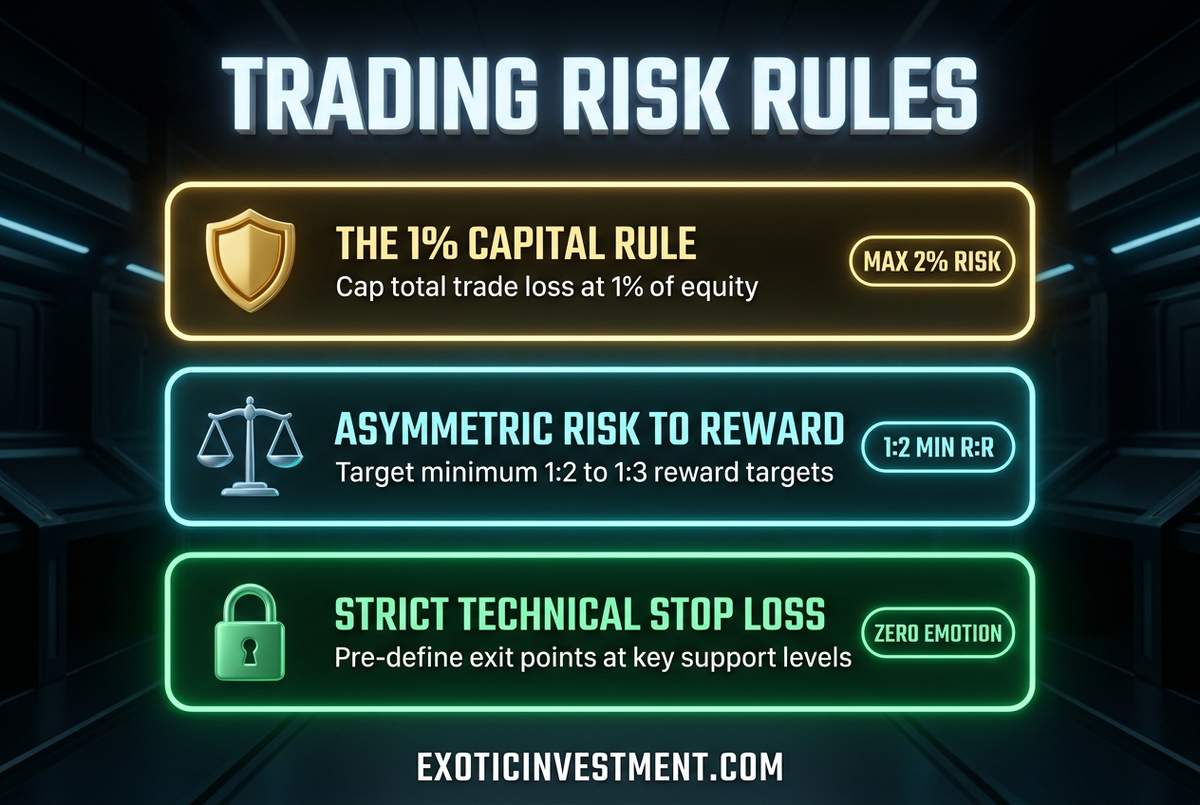
Figure 1: Core institutional framework for capital preservation, position sizing, and asymmetric reward-to-risk.
The 1% Rule: Professional Desk Capital Preservation
Professional hedge funds and proprietary trading desks follow the strict 1% rule: never risk more than 1% of total portfolio equity on any single idea. If your capital is ₹5,00,000, your maximum rupee loss on any trade must never exceed ₹5,000. If your stop-loss on a ₹500 stock is ₹480 (₹20 per share risk), your maximum allowed position size is 250 shares — regardless of your bullish conviction.
Asymmetric Risk-to-Reward: Let Winners Compound
Never take trades offering less than a 1:2 risk-to-reward profile. If you risk ₹15 per share on a swing setup, your minimum conservative target must be ₹30. By enforcing asymmetric payoffs, losing trades remain small controlled paper cuts, while winners compound your capital over quarterly trading cycles.
📋 Regulatory References & Data Sources
- NSE Master Circular on Trading Operations & Derivative Contracts
- SEBI Master Circular for Mutual Funds & Derivative Exposure limits
- Securities Contracts (Regulation) Rules 1957 — Contract settlement guidelines
Disclaimer: This calculator is for educational and planning purposes only. It does not constitute financial advice. Consult a SEBI-registered investment advisor for personalised guidance. Tax rules are updated as per the latest Finance Act — verify with a qualified CA before filing.
🛠️ More Helpful Tools & Calculators
💡 Frequently Asked Questions — Trading Risk Management
What is the 1% risk rule in stock trading?
The 1% risk rule dictates that you should never risk more than 1% of your total trading account capital on a single trade. For example, with an account size of ₹2,00,000, your maximum loss on any trade should be capped at ₹2,000. Check active derivative sizing on our NSE F&O Lot Size List.
How do I calculate position size in Indian stocks?
Position size equals Total Rupee Risk divided by Per-Share Risk (Entry Price minus Stop-Loss Price). If you are risking ₹5,000 and your stop-loss distance is ₹25, your position size is exactly 200 shares. Check broker fees on our Indian Stock Brokerage Calculator.
What is a good risk-to-reward ratio for intraday and swing trading?
A minimum risk-to-reward ratio of 1:2 is recommended for swing trading, and 1:1.5 for high-probability intraday setups. This ensures you remain profitable even with a 40% win rate. Check margin needs using our NSE F&O Margin Calculator.
How does position sizing prevent margin calls and blowups?
By sizing your orders based on stop-loss distance rather than available leverage, a string of consecutive losses only results in controlled drawdowns rather than liquidation. Check portfolio tail-risk using our Value at Risk (VaR) Calculator.
Can this risk management calculator be used for F&O lot sizing?
Yes. Divide the calculated maximum share quantity by the exchange lot size (e.g., 65 for Nifty or 30 for Bank Nifty) to find the maximum allowed lots. Verify which stocks are restricted from trading on our NSE F&O Ban List Today page.
Where can traders learn institutional trade planning and technical analysis?
Explore Dr. Ashok Kumar N Rao’s structured curriculum on Stock Market Basics & Price Action, or test crypto risk management calculators on eMintage.
What exclusive risk analytics are included with Exotic Investment Pro?
Exotic Investment Pro members receive our Kelly Criterion Capital Allocator, Maximum Drawdown Simulator, and downloadable Trade Risk PDF audit sheets.