Introduction to the Psychology of Trading
Welcome to our comprehensive guide on the psychology of trading for beginners India. If you are entering the Indian stock market, you will quickly discover that trading is 20% strategy and 80% psychology. In fact, even with a highly profitable system, a trader who cannot control their emotions will consistently lose money.
Before working on your mental discipline, make sure you understand the technical rules of the market. For instance, read our guides on how to get into the Indian stock market and intro to technical analysis. Furthermore, you will need a strong risk framework. Specifically, check our guides on support and resistance levels and moving averages for trend confirmation. These technical structures provide objective benchmarks that reduce emotional bias.
Understanding Psychology of Trading for Beginners India
Firstly, let us explore why emotions interfere with trading. Specifically, the human brain is wired to avoid pain and seek pleasure. However, in the stock market, this natural drive causes traders to cut profits quickly and let losses run. Therefore, mastering the psychology of trading for beginners India involves retraining your brain to accept small, controlled losses.
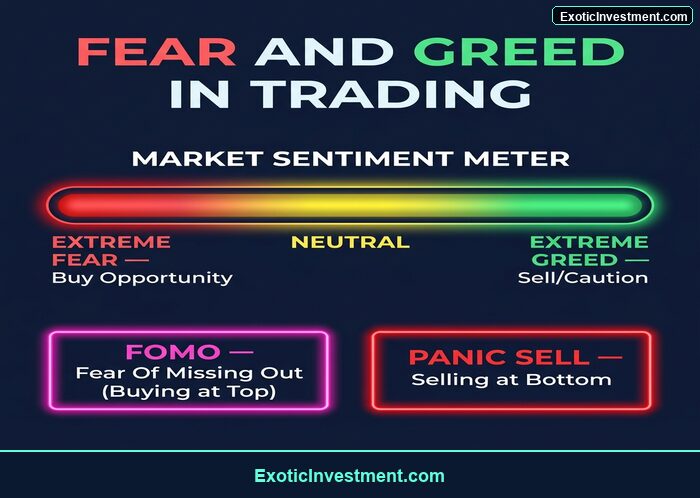
Illustration 1: Fear And Greed Market Sentiment Meter India
In addition, emotional control separates successful retail traders from the majority who lose capital. Because market prices fluctuate constantly, trading triggers intense feelings of fear and greed. Consequently, developing a disciplined, rule-based approach is crucial to protecting your mental and financial well-being.
Master Technical Analysis & Trading: Recommended Courses & Books
For traders seeking structured support, we provide dedicated training programs. In addition, these courses offer practical, step-by-step market education:
Recommended Trading Courses & Premium Subscriptions:
- Options Buying Course in Kannada: Master option trading psychology and Nifty/Bank Nifty setups step-by-step: Options Buying Course in Kannada.
- Technical Analysis in Kannada Course: Learn chart reading, indicators, and volume analysis: Technical Analysis in Kannada Course.
- Kaliyiri Share Market Book: Build your stock market foundation and wealth creation path: Kaliyiri Share Market Book.
- Basics of Stock Market Course: Learn the core fundamentals of stock investing: Basics of Stock Market Course.
- Multibagger Stocks & Pro Subscription (Product 2739): Access premium stock picks, research reports, and pro trader alerts: MultiBagger Plus Courses & Pro Tools Annual Subscription (Direct checkout: Buy Pro Subscription Product 2739).
Overcoming the Two Main Enemies: Fear and Greed
Secondly, fear and greed drive almost all emotional trading errors. Specifically, greed manifests as over-leveraging and chasing overextended stocks. In fact, many beginners buy stocks at their peak due to FOMO (Fear Of Missing Out). Consequently, they suffer massive drawdowns when the price reverses.
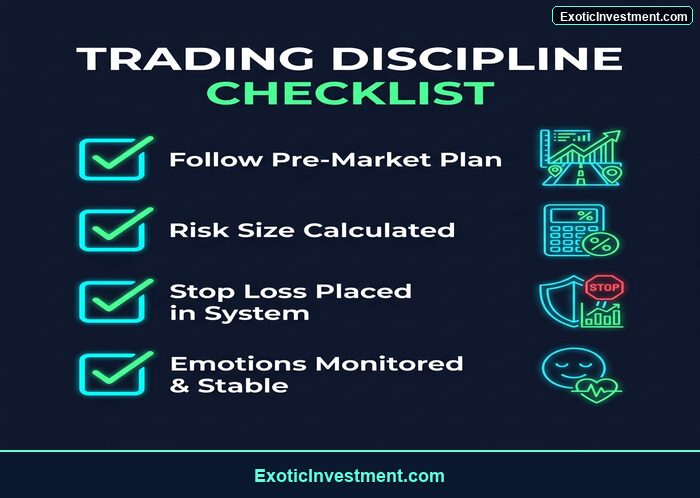
Illustration 2: Trading Discipline Self Control Checklist India
Conversely, fear manifests as hesitation to enter valid setups or cutting profitable trades too early. Therefore, you must establish objective rules to counter these emotions. For example, use our automated Stop Loss Calculator to determine your position sizing before placing an order. Because you know your maximum risk upfront, you can execute trades calmly and objectively.
The Cognitive Biases that Sabotage Trading
Furthermore, multiple cognitive biases affect our trading choices. Specifically, confirmation bias causes traders to seek information that supports their losing positions while ignoring warning signs. In addition, recency bias makes us believe that recent market trends will continue indefinitely. Consequently, traders take excessive risks at market tops and panic at market bottoms.
Therefore, recognizing these cognitive biases is the first step toward overcoming them. In fact, keeping an objective checklist of rules prevents you from acting on impulse. Because you must follow your system strictly, developing self-awareness is essential. To understand how market volume confirms true trends, read our guide on volume and price action in trading.
Developing Self-Discipline in Trade Execution
Furthermore, developing self-discipline is critical for maintaining consistency in execution. Specifically, discipline means following your trading plan even when you feel uncomfortable. For instance, executing a stop loss requires accepting that your trade was wrong. Consequently, many retail traders hesitate and allow small losses to grow. Therefore, treating your stop loss as a non-negotiable exit rule is essential for survival.
In addition, avoid changing your plan mid-trade. Because the emotions of the market can cloud your judgment, you must rely on your pre-market analysis. Consequently, executing trades mechanically ensures that fear and greed do not dictate your decisions. Ultimately, self-discipline is the bridge between a profitable strategy and actual trading success.
Building a Trading Journal Spreadsheet from Scratch
Furthermore, building a structured trading journal spreadsheet is a practical step that every beginner should take. Specifically, set up columns in your spreadsheet for: Trade Date, Stock Symbol, Trade Direction (Buy/Sell), Entry Price, Stop Loss Price, Exit Price, Total Position Size, Net Profit or Loss, and Emotional State. In fact, tracking your emotions allows you to spot patterns of behavioral errors.
Consequently, you can analyze your trade history objectively at the end of each month. For instance, you might notice that you consistently lose money when trading IT stocks during mid-day consolidation. Therefore, you can adjust your trading plan to avoid these situations in the future. Ultimately, a detailed journal translates random trades into systematic learning.
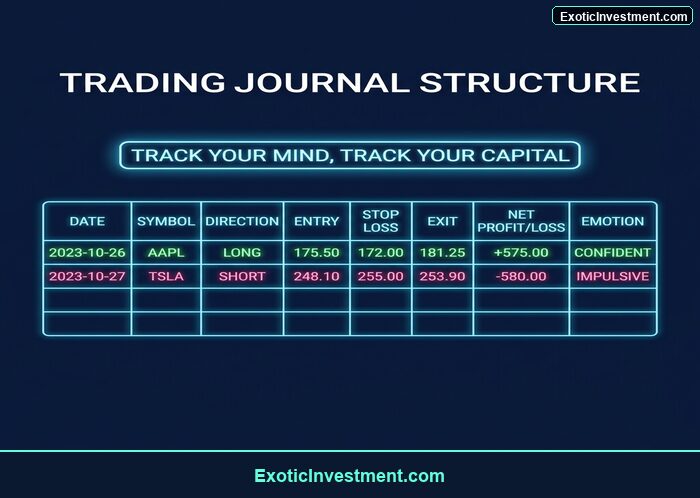
Illustration 3: Trading Journal Spreadsheet Layout Beginners India
Developing the Trader Mindset: Probability Over Certainty
Furthermore, shifting your perspective from looking for certainty to thinking in probabilities is a major breakthrough. Specifically, amateur traders believe that a good trading strategy must predict the future with 100% accuracy. However, professional traders understand that trading is a game of probability. Consequently, they accept that any single trade could result in a loss. Therefore, they focus entirely on executing their edge consistently over a large sample of trades.
In fact, when you think in probabilities, individual losses no longer cause emotional pain. Because you know your system has a positive expectancy, you accept small losses as a normal business expense. Ultimately, this mindset shift removes the anxiety of trading and allows you to execute setups calmly.
The Daily Routine of a Disciplined Indian Trader
Furthermore, establishing a consistent daily routine is essential for maintaining psychological balance. Specifically, begin your day by reviewing global market indicators before the Indian market opens at 9:15 AM. In fact, checking the SGX Nifty and US market performance provides a calm, objective macro outlook. Consequently, you avoid panic when the opening bell rings.
Therefore, dedicate the first 15 minutes of the session to observing price action rather than taking trades. In addition, ensure your pre-market orders are already structured with clear stop losses and targets. Consequently, you act as a calm observer rather than a reactive player. Ultimately, a structured routine builds the mental discipline required for long-term trading survival.
Dealing with Drawdowns and Losing Streaks
Finally, every trader goes through periods of losses, known as drawdowns. Specifically, how you handle a drawdown determines your long-term survival in the market. In fact, amateur traders react to losses by increasing their trade sizes to recover money quickly. Consequently, this revenge trading behavior leads to even larger losses.
Therefore, when facing a losing streak, reduce your position sizes by half or take a short break from the screen. Because protecting your mental capital is just as important as protecting your financial capital, resting is a sound strategy. In addition, review your journal to ensure you are following your trading rules and not trading on impulse.
Managing Risk to Reduce Financial and Mental Stress
To reduce trading stress, you must align your position sizes with your personal risk tolerance. Specifically, use these tools to maintain trading discipline:
- Estimate Costs: Calculate your exact transaction fees using the Zerodha Brokerage Calculator or Upstox Brokerage Calculator.
- Track Returns: Calculate your exact net returns in Indian rupees with the Stock Profit Calculator.
- Compound Wealth Systematically: If active trading causes too much mental stress, consider long-term compounding. For example, learn why stock market investment is better than other investments, calculate compound interest with the Groww SIP Calculator, or build passive cash flow with dividend investing in India.
If you also hold digital assets alongside your stocks, track your overall portfolio performance using a crypto portfolio tracker from Emintage inline. In addition, calculate your tax obligations with a crypto tax calculator or project returns with a bitcoin profit calculator.
Frequently Asked Questions
Q: How do I stop revenge trading after a loss?
A: Firstly, close your trading terminal immediately after hitting your daily loss limit. In fact, taking a physical break is the best way to reset your emotional state.
Q: What is FOMO in trading?
A: FOMO stands for Fear Of Missing Out. It occurs when a trader buys a stock that has already rallied significantly, hoping to capture the remaining move. However, this often leads to buying at the exact top.
Q: Where can I get structured trading training in Kannada?
A: You can enroll in our Options Buying Course in Kannada or read our bestselling Kaliyiri Share Market Book.
In summary, mastering the psychology of trading for beginners India is a continuous journey of self-discipline. Furthermore, always remember that consistency is built on managing your mind, not just managing your charts.
Furthermore, maintaining mental discipline requires a structured approach to risk management. Specifically, never risk capital that you cannot afford to lose. In fact, trading with emergency funds increases stress and guarantees emotional decision-making. Consequently, ensure your trading capital is separate from your personal expenses. Therefore, you can trade objectively without worrying about daily financial survival.